Monday, April 23, 2012

24 de Marzo y La Guerra Sucia

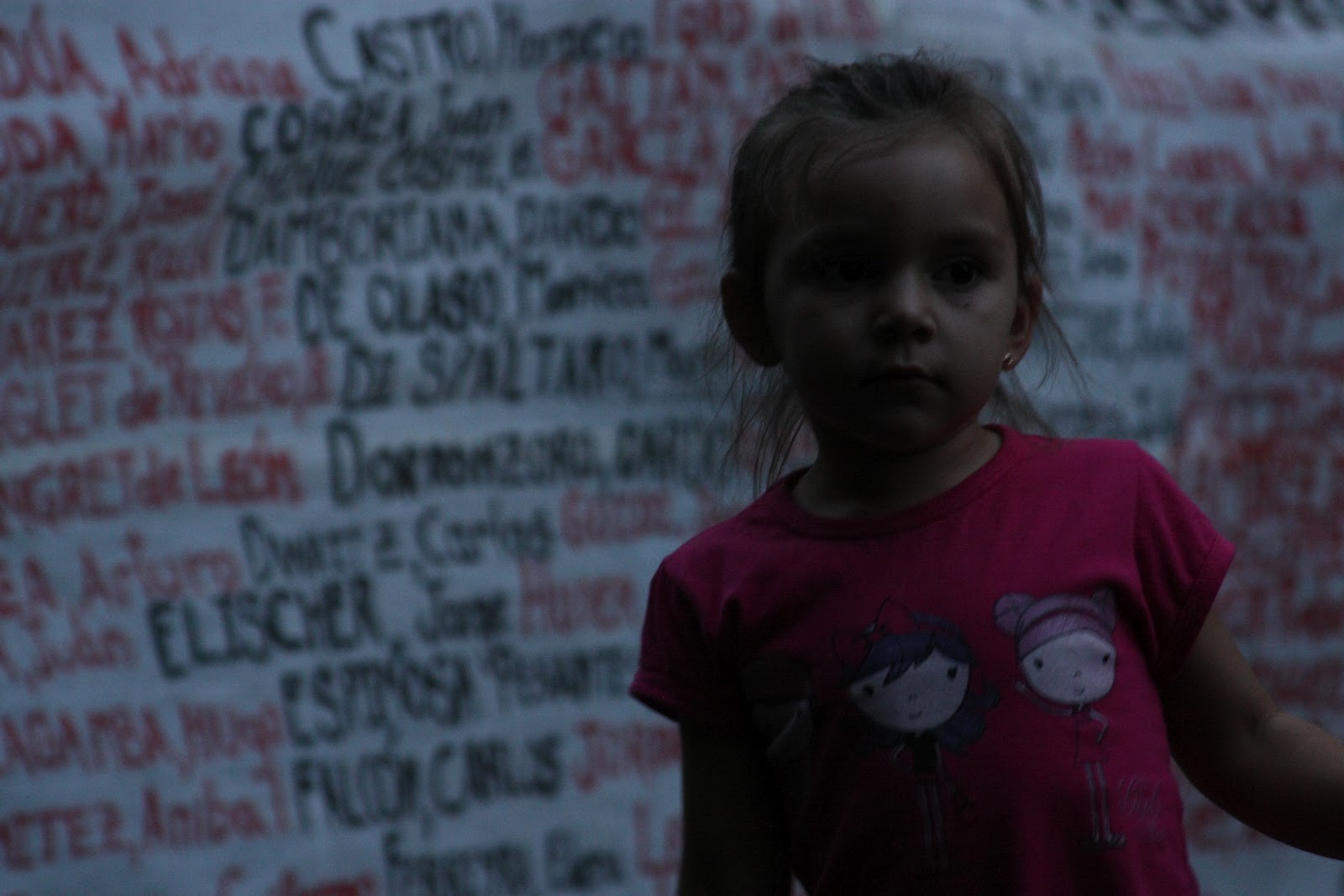
Living in a city as modern and convenient as Cordoba, it´s easy to forget that Argentina is still a developing nation.  With such a vibrant middle class and strong political structure, it seems like the military coups and riots that have formed today´s society could only have happened a lifetime ago.  A totally different era.  Furthermore, living in the western world, stories of concentration camps, political prisoners, police brutality (and no, I´m not talking about Rodney King brutality - the man was on PCP) and militarized governments seem like something from  a place that we only read about in National Geographic.  It´s not really real - it´s a story that our grandfathers tell us when describing their heroic feats in their defense of life, liberty, and the pursuit of happiness in whichever country seemed most appealing to that generation´s president.  They´re gruesome fairy tales that the majority of us will never come to know first hand.

It was March 24, 1976 that the military overthrew the Perónist government - ending socialism in Argentina.  The next seven years were known as "la Guerra Sucia" or "Dirty War" and were marked by a military dictatorship that ruled through terrorism.  Anyone associated with the Perónist party or socialism, including student groups and journalists, was persecuted.  Concentration camps were set up all over the country and while the number is uncertain, human rights organizations estimate that around 30,000 people "disappeared."  They were sent to the camps without any record of who they were or where they were going, to be tortured and killed.  Luckier ones became political prisoners - incarcerated in heinous conditions for their political beliefs.

The story of Juan Perón and his political party is a long, yet highly interesting one, but I´m not here to give a lecture on communism or democracy or to share my sentiments on either - I´m just here to share my experiences.  And part of sharing these experiences is explaining the socialist sympathies of Argentina.  Today it is a relatively successful democracy (with a female President!), but Perón was a socialist ruler (who respected Mussolini) and this is the land of Ché Guevarra - both of whom are enormously popular cultural figures reverred for their significant roles in the nation´s political, economic, and social progress.  That being said, people are still pretty angry about the Dirty War, and their modern democracy allows them to voice their disdain.

But the strangest part of all of this is how recent it was.  It only ended in 1983.  And a lot of the people commemorating and protesting the war were directly affected by it.  Many of them had family members who disappeared in concentration camps, and a lady that I work with told me stories about visiting her husband while he was a political prisoner.  She had to divorce him after he was released because he just wasn´t the same.

Today, the human rights group, "las Madres de la Plaza de Mayo" march in a counter clockwise circle around the Plaza de Mayo in Buenos Aires every Thursday at 3:00 carrying photos of their children who disappeared.  Furthermore, in 2006, March 24 became recognized as a national holiday to honor those that suffered.  So to commemorate the anniversary, they had a concert at La Perla, the concentration camp outside of Cordoba that has been converted into a museum, and a march was held through the city center.




Sunday, March 18, 2012

Somewhere in the middle

Peru v. Argentina


Sleeping Arrangements:


Country Mouse


City Mouse


Backyard:


Mountain Woman


Urban Woman


Things on the side of the road that make me uncomfortable:


El baño.
Along the road to Huyro


Birds.
Along the road to La Luciérnaga


Trabajo (Work):


Incan agricultural map we found in a set of ruins in Sector 3 on Quochapata.  Lines were etched into the rock to depict the layout of a series of terraces.  It´s probably over 500 years old.


Portraits of the chicos of the Luciérnaga spray painted on the wall surrounding the building.  Less than 500 years old.


Totally different lives, equally incredible experiences.  I can appreciate both the city and the country, but in reality, I belong somewhere in the middle.

Segunda Toca (Take Two!)

Second try, pretty stale, gotta use a flash.  Pero mejor que la primera.  
Hay que sacar más.

Buen idea, pero gotta work with this one a bit.

A photo that´s in focus!  I amaze me.

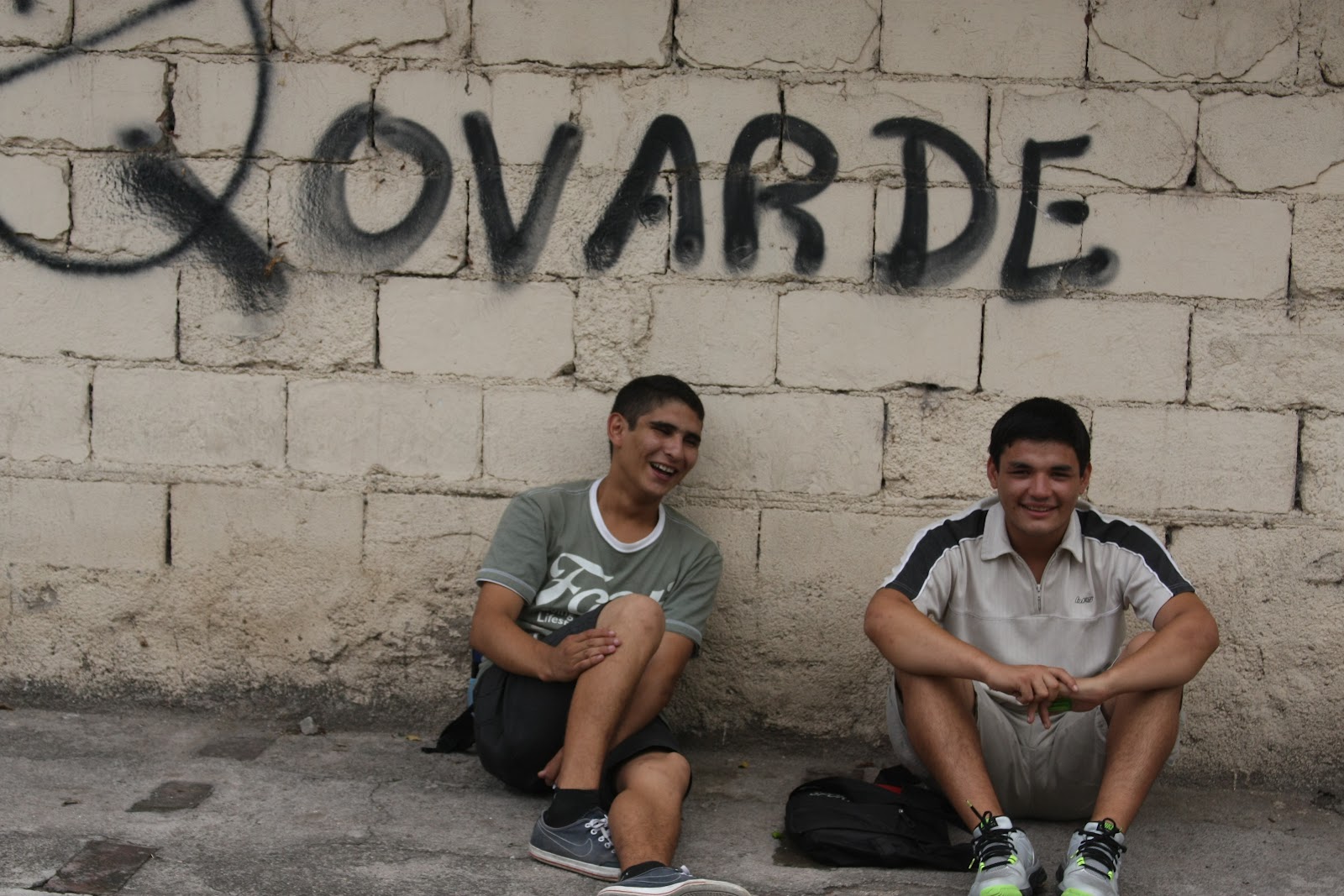
Contra la pared afuera de La Luciérnaga

Franco, adentro de La Luciérnaga edificio.  Ese pintura también es de Cuello.
Amputated feet.

Sunday, March 11, 2012

La Luciérnaga, ramblings on photography, and my new project

As I mentioned in my previous post, I´m working at the Luciérnaga, a magazine created and sold to help out street kids.  Right now, until my Spanish becomes a bit better (it´s already good, but I´m hardly ready to be conducting interviews and writing articles), I´m focusing mainly on photography to go along with some of the articles.  And photographically, this is turning out to be an incredible opportunity.

Aside from taking the photos that they want for the magazine, I´m beginning my own photo project featuring each of the kids.  When I say "kids," I really mean young adults - they´re my age.  Anywhere from 16-26, there are about 20 to 30 people that come in regularly for a meal and to sell the magazine.  This photo project is an art of simply hanging out and getting to know these guys well enough for them to be comfortable enough to let me do a portrait session or two.  And the first step in this is establishing a mutual level of respect.  A lot of these guys really don´t respect women - not in the sense that we´re used to in the states anyway.  And I´m afraid that if I don´t approach this the right way, they´ll think that I don´t respect them.  So it´s just a matter of being cool with each other - standing up for myself, but not letting any disrespectful comments bother me.  And proving to them that just because I come from a totally different background doesn´t mean that I´m any better or worse than they are.  It´s a slow process.

But the great thing about this is that it´s my job - the photos that I have so far, simply, are awful.  But it´s a beginning.  And my job is to go back and shoot and reshoot until I get what I´m looking for.  If there´s one thing that I learned from the portrait series that I did for the Metro Pulse (http://www.metropulse.com/photos/galleries/2011/jun/29/what-makes-you-knoxvillian/),
it´s the importance of reshooting.  Honestly, any of the photos that I took in college that might have been considered to be "good" were luck.  I didn´t work for them.  I was in the right place at the right time and pulled the trigger enough times to get something that could be worked with.  I never reshot anything (except for my skateboard friends, and oddly enough, those turned out to be some of my more successful shoots).  And gosh, I wish I had.  The difference between shooting something once, and going back and reshooting that same subject, is the level of authenticity.  This is even evident in my photos from Carnival a few posts earlier - they´re not good because I was just a spectator who happened to be in the right place at the right time.  If I had known something about what was happening, or had had the opportunity to reshoot it even once more, the photos would have been a lot better.  It´s shallow and unfocused, like so much of what I´ve done so far.

But enough ramblings, here are some photos from my first day of hanging out with some of the guys.
They´re not what I want - at all, but they´re a beginning.  I´m just trying to get comfortable with everyone and to get them comfortable with me.  And it´s all part of getting beyond the level of shallowness that I´m so familiar with.  Rilke wrote, "...sickness is the means by which an organism frees itself from what is alien; so one must simply help it to be sick, to have its whole sickness and to break out with it, since that is the way it gets better."  These early, awful photos are me getting the shallowness, my own sickness, out of the way, so that I can get down to something real.


Gonzalo

Buenhonda

Fumar

Fumados

Fumando

Los Chicos

Adelante a Argentina!

Here in Córdoba I´m working at a magazine called La Luciérnaga, which means "firefly" in Spanish.  It´s a magazine sold by street kids ("kids" is used loosely, these guys are anywhere from mid-teens to mid-twenties).  More than a magazine, La Luciérnaga is a place where the guys can go each day for breakfast and lunch, and where mothers can find clothes, diapers, and formula for their kids if they need it.  But most importantly, as Tata, the Luciérnaga´s social worker informed me, it gives the guys who sell the magazine a bit of structure in their lives.

My job here is to help with whatever they need, in addition to being their photographer.  I´ve been helping to organize the library - cleaning shelves and books, as well as helping to assemble the most recent magazine that came out this past week.


The back gate - an artist named Cuello did all of the paintings around the building


La Luciérnaga!


The kids of one of the girls who comes in


Tuesday, February 21, 2012

Carnival - Ollantaytambo

Saturday, Feb. 18, Ollantaytambo.  It was the kick off of Lent and the Easter holidays.  I didn´t think it was happening until next weekend, but the horns, drums, and water balloons proved me wrong.
Bright colors, dancing, drinking, and a tug-of-war across the bridge in the center of town were the central focus of the festivities.  
Word of advice: never try to travel the weekend of Carnival - you won´t bode well, as we found out the next day when we tried to leave Urubamba.
To make matters worse, my camera is on its final leg, and barely made it through this surprise festival.

The original photos I had posted were awful - like I said already, I don´t have any photo editing or photo filing software with me, so I´m selecting original files based on how they look on the back of my camera and how they appear once posted.  I didn´t realize that half of these were out of focus, and I´m embarassed to have left them up so long. So here´s my second try!


Machu Picchu

If you come to Peru, you have to go.  Even though we live just on the other side of the mountains, it´s a 4 hour journey in comvy (local bus), taxi, and on foot (including a 2 hour hike along the train tracks into Aguas Calientes).
Things to note:
- the importance of water for the Incas - they had an elaborate system of canals and ditches bringing water from the mountain glaciers down and through the city.
- Even though there is a "princess room", there was no princess.  Sorry Disney lovers.
- Hiram Bingham wasn´t the first to discover the city, he just received credit for it.
- The walls were at one point covered with plaster and natural paints
- It was built by slaves.  The city is actually built on two mountains.  The tops were cut off of both mountains, and the rock from this was used to fill in the space between the mountains, creating a flat surface upon which the city was built.
- Each slave had his own personal style of laying the stones for each building - this can still be seen today.


This one needs to be lightened a bit, but this is the city at daybreak.


Tourists along one of the terraces


The path along the terraces


This ain´t Appalachia...


View from above


La madrugada